How a Good Mobile Phone Signal Can Help Reduce Mobile Radiation and Support Safer Mobile Use
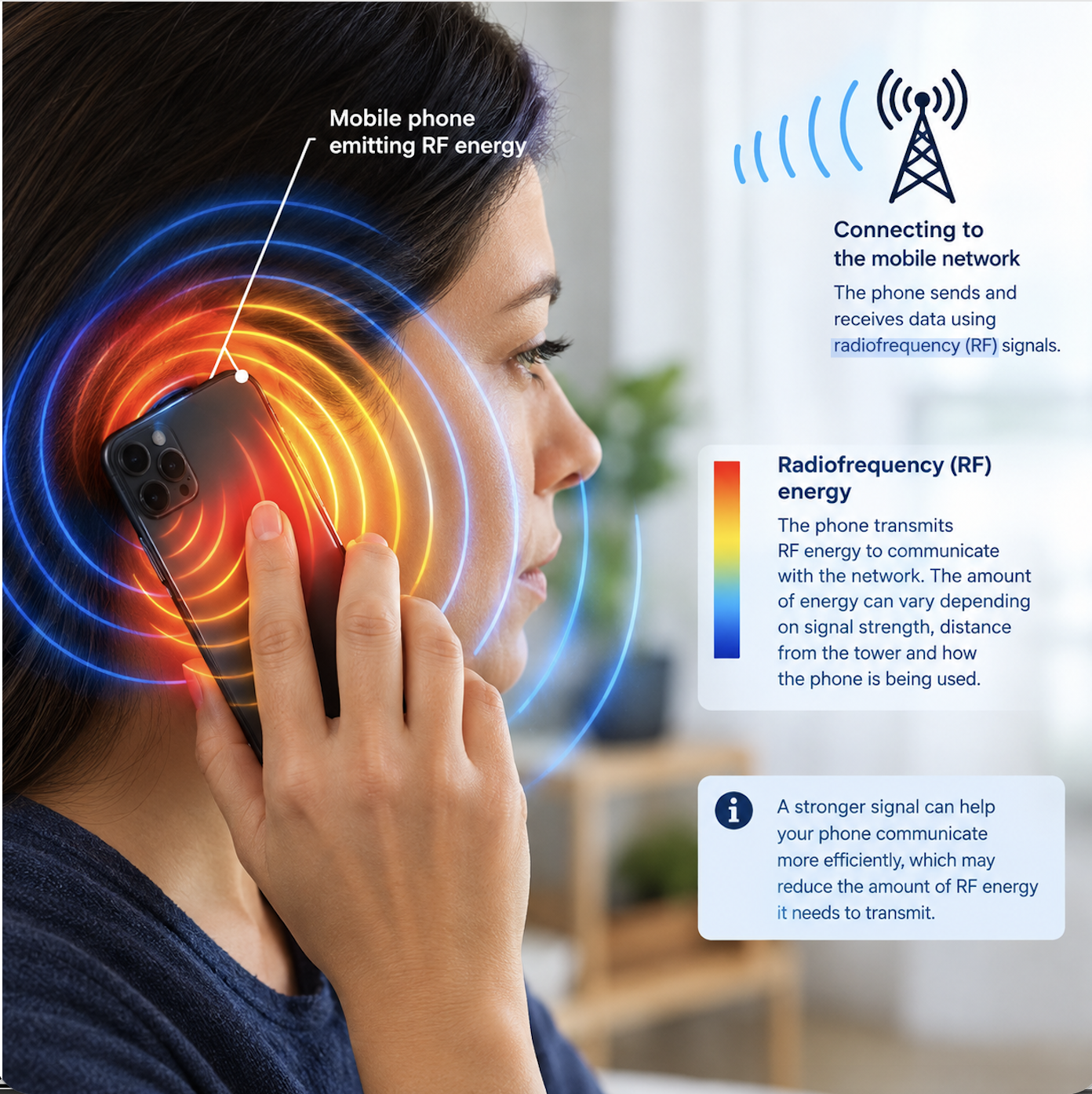
A strong and reliable mobile phone signal is essential for clear calls, dependable communications and fast 4G and 5G data. But there is another reason why signal strength matters: when a mobile phone has a poor connection, it may need to increase its transmission power to maintain communication with the mobile network.
For people in the UK experiencing poor mobile reception at home, in the workplace, warehouse or rural property, improving indoor mobile coverage may therefore help a phone communicate more efficiently with the network.
It is important to be clear that a good mobile signal does not eliminate radiation or guarantee protection from health problems. However, reducing the need for a handset to transmit at higher power during weak-signal conditions can be one practical consideration for people who want to minimise their exposure to radiofrequency (RF) energy.
What Happens When Your Mobile Phone Signal Is Weak?
Your mobile phone constantly communicates with a nearby mobile network. When reception is strong, the phone can generally maintain its connection without needing to transmit at maximum power.
When reception is poor, the handset may increase its transmission power to maintain the connection. This can happen in locations such as buildings with thick walls, underground areas, offices, warehouses and rural properties where the mobile signal from the outside network is weaker.
Poor mobile signal can also cause:
- Dropped or interrupted calls
- Slow 4G and 5G data
- Poor voice quality
- Difficulty making or receiving calls
- Increased battery consumption
- Greater handset transmission power in some weak-signal conditions
This is why mobile signal strength is important for both connectivity and efficient communication between your phone and the network.
Can a Stronger Mobile Signal Reduce Mobile Phone Radiation?
The term “mobile phone radiation” generally refers to the radiofrequency electromagnetic energy (RF energy) used by mobile phones to communicate with cellular networks.
A mobile phone does not transmit at one fixed power level all the time. Its transmission power can vary according to network conditions, signal strength, distance from the serving base station, network technology and how the phone is being used.
When the phone has a stronger connection, it may not need to transmit as strongly as it would under poor reception conditions.
Therefore, improving mobile phone reception may help reduce the amount of RF energy a handset needs to transmit in certain circumstances.
This should not be confused with eliminating RF exposure. A mobile phone will still use radiofrequency energy when communicating with a cellular network.
Why Indoor Mobile Signal Is Often Poor in the UK
Modern buildings can make it difficult for mobile signals to penetrate indoors. Materials such as reinforced concrete, steel, insulated roofing, coated glass and thick walls can significantly weaken cellular signals.
Poor indoor coverage can affect:
- Homes and apartments
- Offices
- Warehouses
- Factories
- Retail stores
- Hotels
- Agricultural buildings
- Basements
- Rural properties
- Commercial and industrial buildings
This can be particularly frustrating in parts of the UK where outdoor mobile coverage is available but the signal becomes weak once it enters the building.
With major UK networks including EE, O2, Vodafone and Three, reliable indoor coverage is increasingly important as businesses and consumers depend on mobile communications for calls, messaging, mobile data and 4G/5G connectivity.
Can a Mobile Signal Booster Help?
A properly designed and compliant mobile phone signal booster can improve cellular coverage inside a building where an adequate external network signal is available.
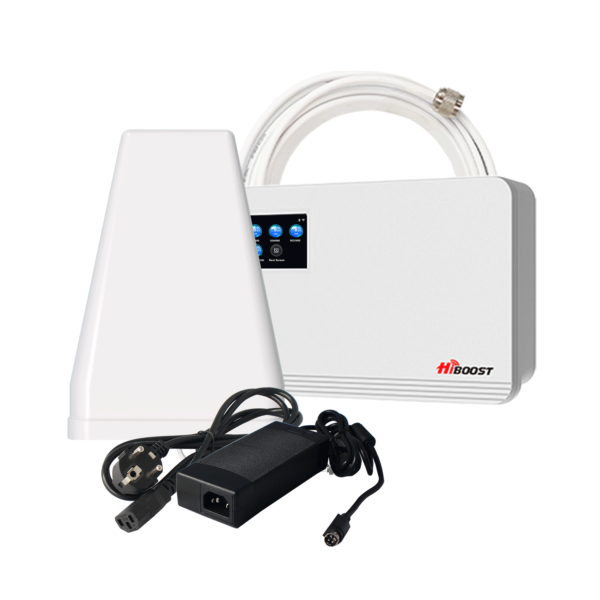
A typical system includes three main components:
1. Outdoor Donor Antenna
The outdoor antenna receives the available mobile signal from the surrounding network infrastructure.
2. Signal Booster
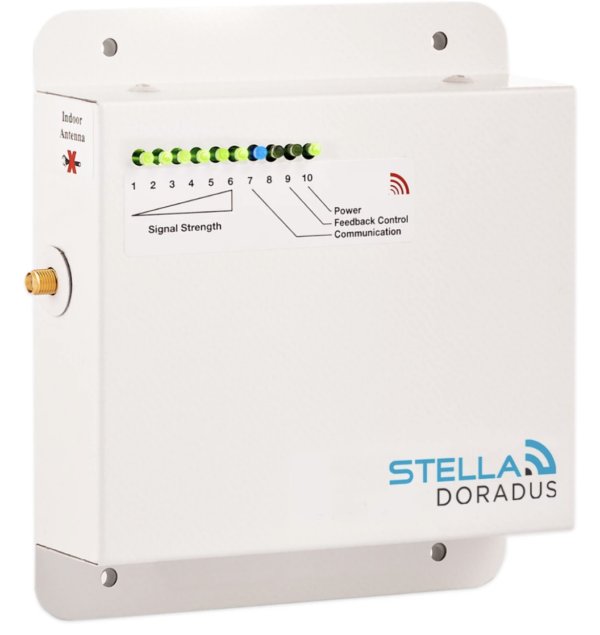
The booster processes and amplifies the cellular signal before distributing it throughout the building.
3. Indoor Antenna
The indoor antenna distributes the improved mobile signal into areas where coverage is weak.
The objective is to provide phones with a stronger and more reliable connection indoors rather than forcing individual handsets to operate in areas of extremely poor reception.
Does a Signal Booster Eliminate Mobile Phone Radiation?
No.
A mobile signal booster does not eliminate RF radiation and should not be described as a medical or radiation-protection device.
Its primary purpose is to improve mobile network coverage and connectivity.
However, when a mobile phone is operating in a weak-signal environment, it may increase its transmission power to maintain communication with the network. Providing better indoor coverage may reduce the need for the handset to transmit at higher power under those particular conditions.
For this reason, improving mobile reception can be considered as one part of a broader approach to reducing unnecessary RF exposure from mobile phone use.
Practical Ways to Reduce Mobile Phone RF Exposure
People who want to take a precautionary approach to mobile phone use can consider several simple measures:
- Use speaker mode for longer conversations.
- Consider using a wired headset when appropriate.
- Keep your phone away from your body when practical.
- Avoid prolonged calls when the phone has very poor reception.
- Use Wi-Fi where appropriate and available.
- Improve poor indoor mobile coverage.
- Reduce unnecessary prolonged mobile phone use.
- Follow the manufacturer’s safety and usage guidance.
These steps are not intended to suggest that normal mobile phone use is unsafe. They are simply practical measures that people may choose to use if they wish to minimise their exposure to RF energy.
UK Mobile Signal Boosters and Compliance
Anyone considering a signal booster in the UK should ensure that the equipment is suitable for the intended mobile networks and complies with applicable UK requirements.
Using an appropriate, compliant system is important because poorly designed or incorrectly installed equipment can potentially interfere with mobile networks.
For homes and businesses suffering from weak indoor mobile coverage, a professionally specified solution can provide more reliable 2G, 3G, 4G and 5G connectivity, depending on the networks and frequencies available at the location.
Improve Your Mobile Phone Signal with WaveBoosters
Good mobile reception is primarily about better connectivity — clearer calls, more reliable communications and faster mobile data. However, signal strength can also affect how hard a handset needs to work to maintain its connection with the network.
A stronger mobile signal may allow a phone to communicate using lower transmission power than would be required under very weak-signal conditions. It does not, however, eliminate RF energy or guarantee protection from health problems.
For UK homes, offices, warehouses, farms and commercial buildings experiencing poor mobile phone signal, dropped calls, weak 4G or 5G coverage or slow mobile data, a properly designed and compliant mobile signal booster or distributed antenna system (DAS) can be an effective way to improve indoor coverage.
Better mobile signal means better connectivity — and under appropriate conditions, it may also reduce the need for a handset to transmit at higher power.
WaveBoosters provides mobile signal solutions designed to improve indoor mobile coverage across the UK and support more reliable mobile communications.
Frequently Asked Questions
Can a stronger mobile phone signal reduce radiation?
A stronger signal may reduce the amount of RF power a mobile phone needs to transmit in some circumstances. It does not eliminate RF energy.
Does a weak mobile signal make a phone transmit more power?
A mobile phone can increase its transmit power when network conditions require it to maintain a connection. Poor signal conditions are therefore one factor that can influence handset transmission power.
Can a mobile signal booster reduce mobile phone radiation?
A signal booster is designed to improve mobile coverage, not eliminate radiation. By improving the available signal, it may reduce the need for a handset to transmit at higher power in weak-signal conditions.
Does a signal booster protect you from radiation?
A signal booster should not be marketed as a radiation-protection or medical device. Its purpose is to improve mobile network coverage and connectivity.
How can I reduce my exposure to mobile phone RF energy?
Using speaker mode or a headset, keeping the phone away from your body when practical, avoiding prolonged calls in very weak-signal areas and improving poor indoor coverage are some measures people can consider.